BOOK ONE OF THE POSTCARDS
Already Open
Fall 1976. A Eurail pass, his father's copy of Kipling's Kim, and a girl who said: December sixteenth. Come find me.
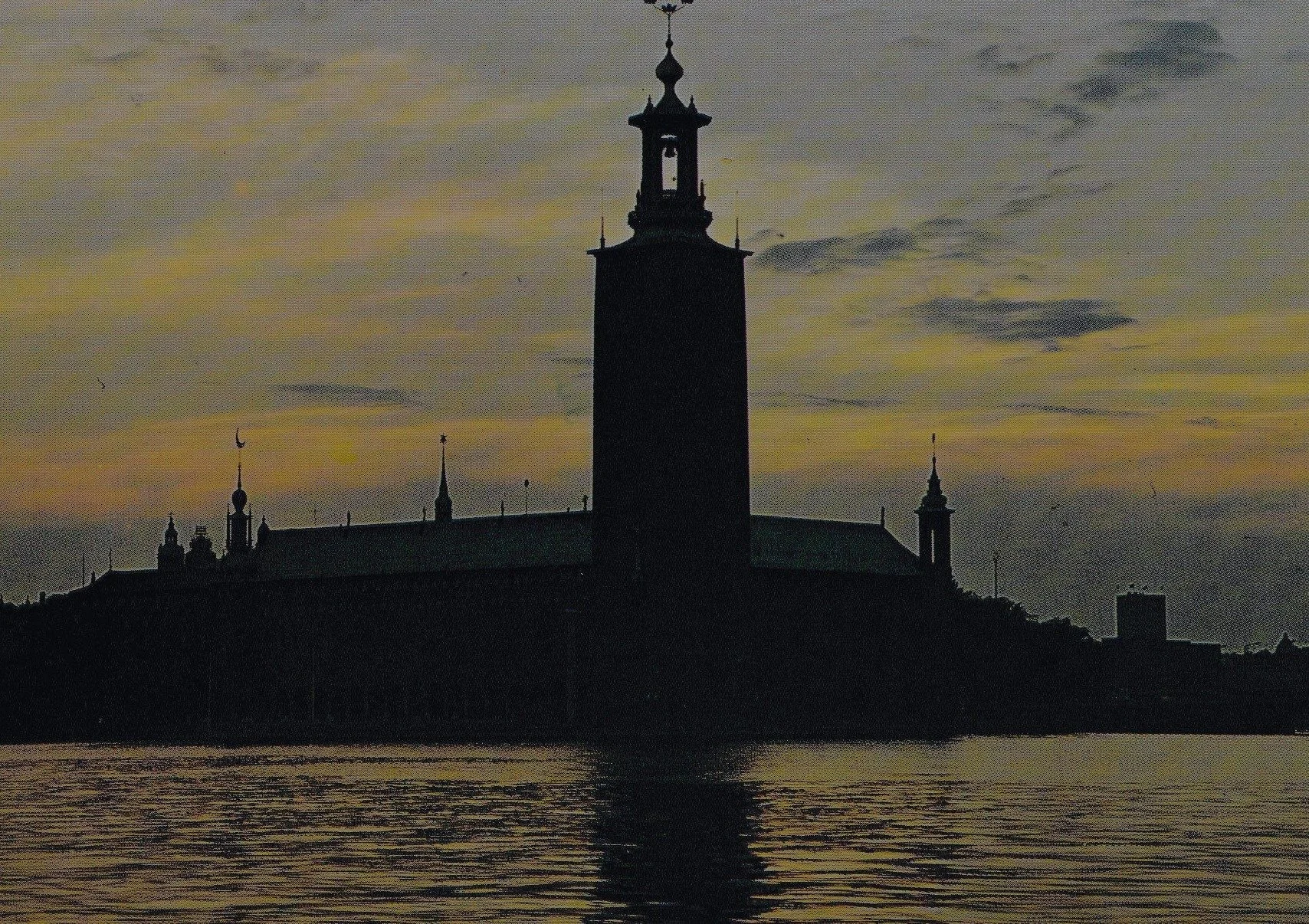
One of the real postcards: Stockholm City Hall, sent home in October 1976.
THE BOOK
A real trip, with a Cold War story underneath it
In the fall of 1976 a mill-town kid from Cloquet, Minnesota, crossed Europe on a Eurail pass with three thousand dollars in traveler's checks in the sole of his boot. That spring, a CIA recruiter had interviewed him in a hotel room in Bloomington. He promised an answer after the trip.
The route is real. The friends are real. The postcards are the ones he sent, word for word. More of the spy story is true than you'd think.
FROM KIM'S NOTEBOOK
ZQZTMSZH
His name, in his father's game. The key is in the book.
THE LONG WAY HOME
Homer took a war his listeners believed had happened, at a city that really stood, and filled it with gods. I took a trip that really happened and filled it with spies.
In the fall of 1976 I was twenty-two, with a Eurail pass and my father's copy of Kipling's Kim. He named me after that book. That spring a man from the CIA had interviewed me in a hotel room in Bloomington. He told me he'd known a Kim once, in London.
ABOUT
Kim Edward Krzenski
Kim grew up in Cloquet, Minnesota, a paper-mill town where his father taught high school English. He was named after Kipling's Kim. At Saint John's University he studied English and theater, and his one-act play The Dump won a PlayLabs prize in 1975. Edward Albee read it and wrote back that it was too short. It sold out three nights on campus the next spring anyway.
In the spring of 1976 a CIA recruiter interviewed him in a Bloomington hotel room. That fall he crossed Europe on a Eurail pass instead. The Postcards is drawn from that trip.

EARLY READERS
I'm looking for a few early readers
Leave your email and I'll be in touch. No newsletter flood, just word when there's something to read.